What is that little hole at the bottom of a padlock for? This clever design feature prevents rust, lets water drain, allows lubrication when locks jam, and reveals how everyday objects often hide smart engineering details that make life safer and easier.

A padlock is one of those everyday objects we barely notice, quietly securing sheds, bikes, gates, and toolboxes. We twist a key, hear the click, and move on. But if you look closely at the bottom of a padlock, you’ll see a tiny hole—easy to miss, yet essential to the lock’s function.
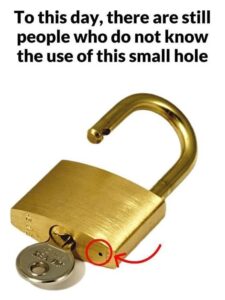
Padlocks endure rain, heat, snow, and humidity. Because they’re made of metal, moisture that seeps inside can cause rust and corrosion, eventually jamming the internal parts. The small hole provides a drainage point, allowing trapped water to escape and preventing long-term damage.

But the hole serves another purpose. Over time, dirt, grit, or cold weather can make a lock stiff or stuck. The opening allows lubricants like graphite powder or lock oil to reach the internal tumblers. A few drops through the hole can loosen the pins and restore smooth movement—saving a lock that might otherwise be cut off.

Even modern weatherproof padlocks often keep this feature. Rubber coatings and improved seals help block moisture, but engineers still include the small hole as a pressure release point and backup drainage channel. It’s a timeless design choice that continues to prove useful.

Once you understand this hidden feature, it becomes easier to appreciate the subtle details built into other everyday items. A screwdriver, for example, may have a square or hexagonal handle base designed to fit inside a wrench, allowing extra torque for tight or awkward spaces.

Clothing also carries small, meaningful design elements. The fabric swatch attached to new garments once helped stores match patterns and colors before digital catalogs existed. Shoppers used it to test detergents or check fabric reactions without damaging the clothing.

Some features exist for hygiene. Brass doorknobs and pulls are still common because brass is naturally antimicrobial, killing bacteria on contact.

Even cars hide clever cues—like the tiny arrow on the fuel gauge that quietly tells drivers which side the gas tank is on. Small details, big impact.

Related Posts

A Visual Reminder That Everyone Sees Things Differently

At first glance, the image seems ordinary: a sliced loaf of bread marked by neat, circular rings. Yet it instantly pulls you in. How many circles do…

Baby born weighing 15 ounces goes home after 6 month fight

TYLER, Texas (KYTX) – A baby who was born weighing just 15 ounces went home after a six-month fight for her life. “It was so scary, because…

If Slugs Keep Visiting Your House Check This Immediately Before Bigger Problems Appear

Finding slugs inside your home can feel unsettling, especially when they appear silently at night and leave slimy trails behind. While slugs themselves are harmless, their presence…

Happy Birthday, my brave girl. 🎂💪 Never let the silence of others dim your light.

The Zodiac Signs Most Likely to Experience Psychic Dreams—Is Yours One of Them?Many people wake up from dreams that feel too real or too symbolic to ignore….

The Zodiac Signs Most Likely to Experience Psychic Dreams—Is Yours One of Them?

The Zodiac Signs Most Likely to Experience Psychic Dreams—Is Yours One of Them?Many people wake up from dreams that feel too real or too symbolic to ignore….

Classic Vintage Treasure That Fits Seamlessly in Modern Homes

Small Tools, Big Stories: The Antique Kitchen Towel Clamp Some of the most fascinating stories come from the smallest objects. While browsing antique shops or exploring old…

Leave a Reply

Your email address will not be published. Required fields are marked *