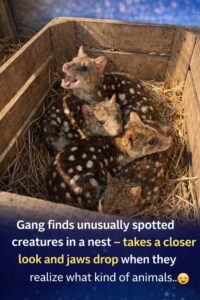
There is renewed hope for the western quoll, a native Australian species that once came close to disappearing entirely. Conservation researchers are celebrating a major milestone after newborn quolls were discovered at Mt Gibson Wildlife Sanctuary, marking a significant step forward in long-term recovery efforts. For scientists, the sight of these tiny, spiky infants represents more than a heartwarming moment—it confirms that restoration work is producing real results.
Western quolls, also known as chuditchs, are carnivorous marsupials about the size of a domestic cat. Once widespread across much of Australia, their numbers fell dramatically after European settlement due to habitat loss, introduced predators, and land-use changes.
Today, they survive only in small, fragmented populations in southwestern Australia. Despite their limited range, western quolls play a vital ecological role by helping control populations of insects, reptiles, and small birds, making their return especially important for ecosystem balance.
In recent months, conservation teams have been carefully reintroducing western quolls to Mt Gibson Wildlife Sanctuary, an area where the species had previously vanished. The goal was not only to release the animals but to ensure the habitat could support them long term. The discovery of pouch young confirms the quolls are not only surviving but also breeding successfully in their new environment—strong evidence that the sanctuary provides suitable food, shelter, and protection.
According to Georgina Anderson, Senior Field Ecologist with the Australian Wildlife Conservancy, regular monitoring has shown encouraging signs of adaptation. Motion-activated cameras have captured frequent sightings of healthy quolls exploring the area, including a well-known individual nicknamed Aang. These observations confirm the animals are settling in confidently, offering powerful proof that science-based conservation and protected habitats can give threatened species a second chance to thrive.
