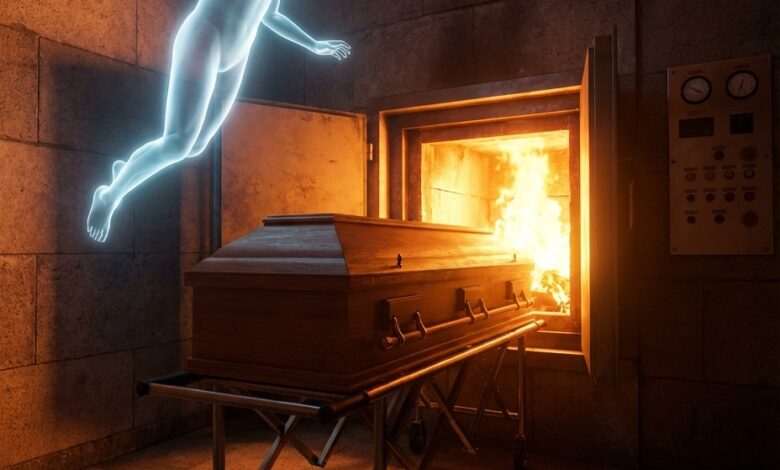
In the quiet chambers of the human heart, few subjects elicit as much solemn reflection as the final disposition of the physical body. As we navigate the complexities of the 21st century, the shift toward cremation has moved from a peripheral alternative to a mainstream choice, driven by urban density, economic considerations, and shifting cultural sensibilities. Yet, for the person of faith, this choice is never merely a matter of logistics. It is a decision fraught with spiritual weight, prompting believers to ask: Does the flame diminish the hope of the soul? Does the choice of the urn over the casket signal a departure from the sacred traditions of the past? The conversation surrounding cremation is ultimately a journey into the heart of scripture, the power of symbolism, and the indestructible nature of divine promise.
Historically, the Judeo-Christian tradition has been deeply anchored in the practice of burial. From the earliest accounts in the Old Testament, the act of “laying to rest” was portrayed as an essential gesture of dignity and covenantal hope. Abraham purchased a cave for Sarah’s burial; Joseph gave specific instructions that his bones be carried back to the Promised Land; and the New Testament reaches its dramatic zenith with the burial of Jesus in a borrowed tomb. This consistent biblical pattern has shaped a theological preference for interment, where the body is viewed as a seed planted in the earth, awaiting the dawn of a final resurrection. The imagery is powerful: just as a seed must be buried to eventually sprout into new life, the believer’s body is returned to the soil in anticipation of a future, glorified existence.
This preference for burial is also rooted in the biblical anthropology that views the human body not as a mere vessel to be discarded, but as a temple of the Holy Spirit. In the eyes of many traditionalists, burial maintains the integrity of the human form, honoring the physical self that God created and redeemed. The language of “returning to dust” found in Genesis is often invoked to describe a natural, time-honored return to the elements—a slow dissolution that mirrors the gentle passing of time. For generations, the cemetery has served as a “sleeping place” (the literal meaning of the word koimeterion), a silent testimony to the belief that death is not a permanent state but a temporary slumber.
However, as cremation becomes an increasingly practical reality for many families, theologians and believers alike have returned to the scriptures to find a broader perspective. A central tenet of the Christian faith is the absolute sovereignty of God over the physical world. If the Creator is capable of fashioning the universe out of nothing (ex nihilo), then the state of the physical remains at the time of resurrection cannot be a barrier to His power. History is replete with martyrs who were consumed by fire, sailors lost to the crushing depths of the sea, and saints whose remains were scattered by the winds of war or natural disaster. Faith asserts that these souls are no less secure in the hands of the Almighty. The promise of restoration is not contingent upon the preservation of every molecule of biological matter, but upon the creative word of God.
From this perspective, the method of returning to “dust” becomes a secondary concern to the state of the soul. Whether the body undergoes a slow oxidation in the earth over decades or a rapid oxidation through the heat of the flame in an hour, the chemical result is identical. The focus shifts from the biological process to the spiritual intention. For many modern families, cremation is chosen not out of a lack of faith, but out of a desire for stewardship, simplicity, or to accommodate the realities of a globalized world where family members are scattered across continents. When the intention is rooted in respect and the preservation of memory, many faith communities now view cremation as a permissible path that does not infringe upon the core doctrines of the faith.
The guiding principle for most religious leaders today is the concept of dignitas. Regardless of whether the final destination is a plot of earth or a niche in a columbarium, the process must be characterized by reverence. The body is a narrative of a life lived, a physical history of joys, sorrows, and service. Therefore, the treatment of remains is an act of worship. Churches often encourage families to avoid viewing cremation as a “disposal,” but rather as a sacred transition. This is why many choose to hold a funeral service with the body present before cremation, or a memorial service where the ashes (cremains) are treated with the same liturgical respect as a casket.
Furthermore, the conversation around cremation allows believers to confront a profound spiritual truth: our ultimate hope is not anchored in the ground, but in the heavens. The physical body, as we know it, is subject to decay—it is, as the Apostle Paul described, a “tent” that is eventually folded away. The transition from this world to the next is a move from the temporary to the eternal. By releasing the physical form through cremation, some find a powerful symbol of the soul’s liberation, a literal “ashes to ashes” that emphasizes the transience of our earthly life and the permanence of our spiritual home.
Ultimately, the choice between burial and cremation is a matter of conscience, culture, and conviction. It is a decision that should be made in the light of prayer and with a deep understanding of one’s own theological foundations. While tradition provides a beautiful and time-tested map through burial, the grace of faith provides a wide horizon that encompasses the flame. The lasting assurance for the believer is that nothing—neither height nor depth, nor life nor death, nor the manner in which we return to the elements—can separate us from the love of the Creator.
As we look toward the future, the sanctuary of the cemetery and the quiet of the columbarium will continue to stand as monuments to our love and our longing. Whether we mark a spot of earth or keep a vessel of memory, we do so with the same enduring hope. We are a people who believe that life is changed, not ended. In the end, the dust—whether gathered by time or by fire—is merely the dust of a workshop where a master craftsman is preparing to make all things new. The physical remains are but the signature of a story that God has promised to continue in a kingdom where death is no more, and where the “many” will find their ultimate rest.
