Bright Orange Dust Along Your Baseboards? Here’s What It Could Mean
Finding bright orange dust along your baseboards can feel unsettling. It looks unusual. It raises questions. And it often sparks concern about what’s happening inside your home.
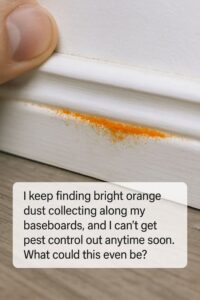
While you wait for pest control or a professional inspection, you can still narrow down the cause. Several common issues may explain this mystery dust. Let’s walk through them—step by step.
Could It Be Sawdust From Hidden Wood Damage?
First, check your wood.
If your home has wooden floors, walls, or trim, the dust may be sawdust. Wood damage often creates fine debris. In some cases, pests cause it.
Termites and carpenter ants leave behind frass. This material mixes wood particles with insect waste and can appear orange.
What to look for:
-
Tiny holes in wood
-
Soft or spongy spots
-
Crumbling edges
If you spot these signs, act quickly. Wood damage worsens fast.
Termite Frass vs. Regular Dust
Next, examine the texture.
Termite frass looks different from everyday dust. It appears uniform. The particles are small and pellet-like. Most measure about 1 millimeter.
You’ll often find frass in small piles near walls or baseboards. That usually signals active termites.
If the dust looks consistent and grainy, don’t ignore it.
Carpenter Ants and Other Wood-Loving Insects
Now, consider carpenter ants.
These insects hollow out wood to build nests. As they dig, they push debris out. That debris can collect along baseboards.
Sometimes, the material turns orange when it mixes with paint, rust, or dirt.
Watch for:
-
Rustling sounds inside walls
-
Small exit holes
-
Ants indoors, especially at night
Sealing entry points and reducing moisture can help—at least temporarily.
Rusting Nails, Screws, and Metal Brackets
In some cases, the problem isn’t pests at all.
Metal fasteners can rust over time. High humidity speeds up the process. As rust flakes off, it forms orange powder.
Check baseboards, door frames, and window trim. If metal sits behind or beneath them, rust could be the culprit.
Replacing or treating the hardware can stop the spread.
Wood Friction From Daily Movement
Sometimes, simple wear causes the dust.
Doors rub. Furniture shifts. Floors expand and contract. Over time, wood-on-wood contact creates fine debris.
Look closely at high-contact areas. If you see scuffing or rubbing, friction may be to blame.
Applying wax or lubricant often reduces the problem.
Paint, Stain, or Drywall Breaking Down
Next, inspect your walls.
Paint, stain, and drywall pigments degrade over time. Humidity, heat, and sunlight speed up the process. As materials break down, they shed particles.
Check for:
-
Peeling paint
-
Cracks
-
Fading or chalky residue
Repainting or sealing affected areas can help contain the dust.
Brick, Tile, and Concrete Dust
Construction materials can shed too.
Brick, tile, and concrete slowly erode—especially if unsealed. Chips, grout dust, and fine particles may collect along baseboards.
Inspect for cracked grout or crumbling edges. Repairs and sealing usually solve the issue.
Outdoor Dirt and Pollen Sneaking Inside
Sometimes, the source comes from outdoors.
Soil, pollen, and road dust enter through gaps. Shoes track debris inside. Poor seals make it worse.
To limit this:
-
Seal doors and windows
-
Use quality doormats
-
Clean baseboards regularly
Air purifiers can also help reduce buildup.
Mold or Mildew With Rust-Colored Spores
In damp areas, mold becomes a possibility.
Certain molds release rust-colored spores. These often appear as orange or reddish dust.
Check basements, bathrooms, and kitchens. Look for moisture, leaks, or poor airflow.
If you find mold, address moisture first. Professional removal may be necessary.
Household Items That Break Down Over Time
Sometimes, everyday items cause the mess.
Pet toys, fabrics, and decorations can crumble as they age. Cheap materials degrade faster and leave colored residue behind.
Inspect nearby items. Replace anything shedding particles.
When Cleaning Hacks Make Things Worse
Finally, review your cleaning routine.
Some viral cleaning tricks do more harm than good. Abrasive products can damage surfaces. Residue can attract more dust.
Stick to gentle cleaners. Avoid harsh scrubbing. When in doubt, research first.
Simple DIY Tests You Can Try Right Now
While you wait for pest control, try this:
-
Place white paper under the dusty area
-
Leave it for a few days
-
Check what falls and how it looks
You can also gently tap nearby surfaces. Watch what comes loose.
These small tests can reveal patterns—and give professionals a head start later.
The Bottom Line
Bright orange dust looks alarming, but it often has a logical explanation. With careful observation, you can narrow down the cause and take smart steps until help arrives.
Sometimes, the smallest clue tells the biggest story.
