Tipping at a nail salon may seem like a minor detail, but it plays a meaningful role in how the service economy functions. It sits at the intersection of etiquette, compensation, and everyday human interaction, shaping the experience for both clients and technicians.
Nail technicians perform detailed, hands-on work that combines hygiene, technical precision, and creativity. Their jobs often involve long hours, physical strain, and sustained focus. In many salons, base wages are modest, and tips make up a significant portion of overall income. In this context, tipping is not simply a reward for a pleasing result, but a practical way to recognize time, skill, and care.
Over time, tipping has become part of the unspoken rhythm of salon culture. Regular, fair tipping can contribute to a more comfortable atmosphere and a sense of mutual respect. Appointments may feel less transactional and more familiar, particularly when clients and technicians build ongoing working relationships.
Questions often arise about whether all services warrant a tip or only more elaborate ones. Industry norms generally support tipping for all nail services. Even basic manicures or pedicures involve sanitation, shaping, cuticle care, and careful application—tasks that require training and attention regardless of the final design.
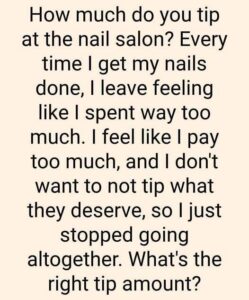
As for amount, there is no strict rule, but a range of 15 to 20 percent of the service cost is commonly accepted. More time-intensive or complex services, such as detailed nail art or acrylic sets, often justify tipping toward the higher end of that range.
Other factors can also guide tipping decisions, including service quality, time spent, and any additional effort involved. Special requests, last-minute changes, or extended appointments can increase workload, and a tip can acknowledge that added demand.
Ultimately, tipping is less about percentages and more about recognition. It reflects broader values around respect for skilled labor and appreciation for personal care work. When approached thoughtfully, tipping supports a healthier salon environment and reinforces a sense of fairness and professionalism for everyone involved.
