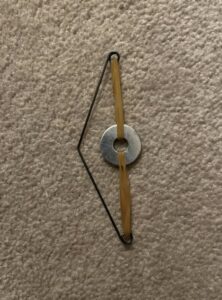
 What Is the Rattlesnake Envelope Prank?
 A Brief History:
First patented in the early 1900s, the rattlesnake prank became wildly popular in the 1930s–1950s.
Sold in joke shops, magic stores, and even by mail-order catalogs, it was the original “jump scare.”
Often used by kids on siblings, coworkers on April Fools’ Day, or pranksters sending “mysterious” mail.
Fun fact: Vintage versions were sometimes called “snake-in-the-box” or “envelope jacks.”
 Is It Safe?
Yes—when used responsibly. The device is made of light-gauge wire and rubber, so it startles but doesn’t injure. However:
Avoid using it on people with heart conditions, anxiety disorders, or young children—the shock can be more than just a laugh.
Never use it in official-looking envelopes (e.g., mimicking bills or legal mail)—it could cause real distress.
 How to Make Your Own (Simple DIY)
You only need three items:
A metal coat hanger wire (cut and shaped into a coil)
A rubber band (for tension)
A small washer or bead (to add weight and “rattle”)
Steps:
Bend the wire into a tight spiral with a straight tail.
Loop the rubber band around the coil and anchor it to the tail.
Place the washer at the tip for extra momentum.
Fold flat and insert into an envelope, securing the tail under the flap.
 Pro tip: Test it on yourself first!
 Why It Still Matters
In a digital age of memes and TikTok pranks, the rattlesnake envelope feels almost charmingly analog—a reminder that surprise and laughter don’t require Wi-Fi.
Finding one in your closet isn’t just nostalgia—it’s a tiny time capsule of playful human creativity.
Final Thought
So next time you’re cleaning out old drawers and spot that odd little coil, don’t toss it. Smile. Maybe even send it to a friend who could use a good (harmless) scare.
After all, as long as there are envelopes… there will be rattlesnakes waiting inside.
“The best pranks aren’t mean—they’re mischievous, momentary, and met with laughter.”
Have you ever fallen for (or pulled off) this prank? Share your story below—we’re all about lighthearted fun! 

