A vintage kitchen tool recently became the center of a lively online debate as users tried to figure out its purpose. Shared in a Reddit post, the peculiar metal device with a sharp, weapon-like design left many scratching their heads. The item, discovered while cleaning out a grandmother’s house, sparked theories ranging from a 19th-century can opener to a multipurpose camping gadget. Some users even joked it could double as a weapon.
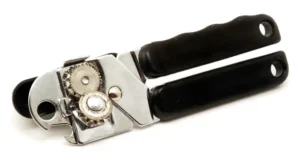
A typical can opener (for illustrative purposes), Photo Credit: Wikimedia
The mystery unraveled as older users chimed in with memories—and scars—linked to this antique tool. It turned out to be an early version of the can opener, a relic from a time when opening canned food was more of a battle than a convenience.
A Dangerous Design That Made Its Mark
“This thing was a hazard,” one commenter wrote. “I’ve still got a scar from when it slipped while I was opening a can as a kid.” Others shared similar stories, recalling the jagged edges and the occasional metal shards that these early openers could leave behind.
Another user described the process: “You had to punch it into the can and lever it forward step by step to cut the top off. It worked but wasn’t for the faint of heart.”
A vintage can opener laying on a tiled surface, Photo Credit: Reddit
The Invention of the Can Opener
The history of the can opener begins in the early 19th century, but not for the reason you might expect. Canned food was invented decades before anyone thought to create a convenient way to open it. Back then, brute force was often required—think hammers and chisels.
In 1858, Ezra Warner designed the first dedicated can opener, a lever-like tool with a sharp, curved blade. While effective, it wasn’t particularly safe or user-friendly. It was primarily used by the U.S. military during the Civil War.
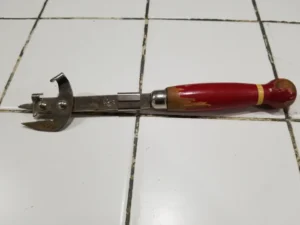
A vintage can opener laying on a tiled surface, Photo Credit: Reddit
The real breakthrough came in 1870 when William Lyman invented a can opener with a rotating cutting wheel. This design made opening cans safer and easier, though it still required some effort. Over time, innovations like electric can openers in the 1930s and ergonomic handheld models in the 1950s brought the tool closer to what we use today.
A Legacy of Convenience—and Danger
Despite advancements, some people still swear by the old designs. “I still have one and use it occasionally,” one Facebook user shared. “It’s a dangerous little thing, but it gets the job done.”
Another added, “Tried to buy one recently—you can’t find them anymore!”
Though modern openers have made the process safer, this vintage tool remains a reminder of the ingenuity—and occasional hazards—of the past. From battle scars to fond memories, it’s clear that this old-fashioned gadget still holds a special place in kitchen history.